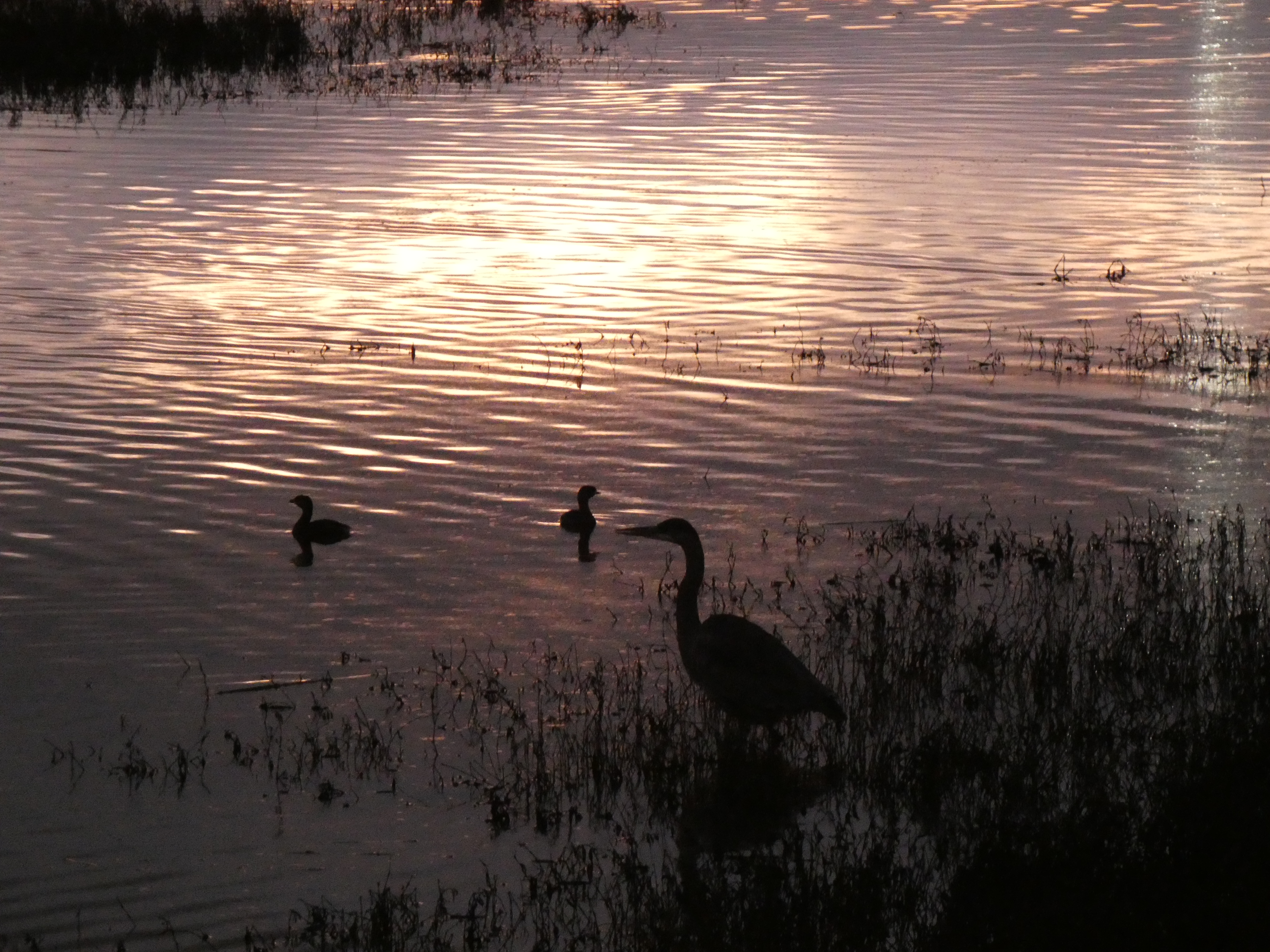
While there are many amazing ecosystems around the world, I find myself especially partial to wetlands. This is probably because I have easy access to several urban wetlands near my home and a lot of my volunteer work is centered around them, but as a birder and naturalist I also appreciate their incredible biodiversity and ecological benefits.

Wetlands 101: What is a Wetland?
According to the EPA, a wetland is an area where water is present at or near the surface of the soil for at least part of the year. This regular presence of a higher level of water helps support plants and animals as it provides additional nutrients and conditions. They can be found near the coast (estuaries and tidal flats), inland near lakes and rivers, or seasonally in the form of vernal pools or seasonal ponds.
Native wetland plants and soils work together to bring necessary nutrients to the ecosystem, while capturing substances like nitrates and phosphates before they can run into neighboring rivers and streams (by up to 90%). This process slows down the movement of water through an area, which prevents erosion and flooding. Plants like rushes, sedges, and grasses help trap carbon – keeping it out of the atmosphere at a rate of 8.1 million tons a year.
Wild: Living on the Edge
Having lived near wetlands for many years, I thought I understood them. But like so many things, the more I looked, the more I began to notice – and I realized there was so much more to these spaces than I thought. For some of the wetlands I’ve worked in, you can descend from the parking lot of a shopping center, down a gentle hill, and into what feels like another world. Even though we are surrounded by human created structures, those noises seem to fall away and are replaced by gently burbling water, the squelch of mud under boots, and the calls of ducks and shorebirds.
Though these can feel like distant far off places, they are often in our backyards. Wetlands have rich soil, full of nutrients deposited out of the water that flows through them. They are typically also in flat areas that are connected to the floodplain of a river or creek. Because of this, wetland areas were often converted into farmland as these conditions support crops and livestock. Since they required “minimal” change to create a flat, buildable surface, many were also filled in to construct homes and shopping centers.
And it is these conditions that can lead to conflict with humans. We find ourselves annoyed by the flooding of local streets by a beaver dam in a nearby creek or on edge at the news of a coyote wandering through the neighborhood backyards. But the reality is that these animals were living in the spaces long before we paved them over. And for many, adapting to live around humans is much easier than seeking out a new home in the patchwork of increasingly disconnected ecosystems.

Wonderful: Awe and Amazement Around Every Corner
For me, exploring wetlands sometimes feels like having access to an endless library of incredible things – nature’s very “streaming” service. Almost every time I go out, I see something new or note a detail I had previously missed. Water is not in constant supply either, so these spaces are shaped by the ebb and flow. A few of my favorite wetland wonders are the following:
- Birds Galore: I have had an interest in birds for years, thanks to my grandma’s teachings at her window feeders. But what really got me hooked on the birder bug was trying to learn the birds that lived near me. I knew Mallard, Great Blue Heron, and Black Capped Chickadee… but then became aware of the Great Egrets, Green Winged Teals, and Mourning Dove. And with seasonal visitors, the list grows even longer. I will never forget the first time I saw a Bald Eagle soaring just above the water, a Green Heron hunting from atop a partially submerged branch, or a pair of Wood Ducks peeping between the willows. Birding makes me slow down, be quiet, and take the time to notice the details in the wetland.
- Beavers and Nutria: Living in Oregon, one of the treats is the giant aquatic rodents. Many of them are nutria, an displaced rodent from South America, with white whiskers and a thin rat-like tail. They are quite accustomed to humans, and can be found munching on grasses around the edges of wetlands and ponds. Some can be quite large, leading many to think they have sighted a beaver – though if it is daytime…probably not. The beavers are most active between dusk and dawn, with some local groups meeting up in the hopes of catching a glimpse in the early morning rays. The adults are noticeably large and darker than their South American cousins. The large paddle-like tail is another giveaway, but can be difficult to see when they are swimming. I have seen more beaver evidence – like chewed trees and scat than the animals themselves. Though this is always an encouraging sign that they are active in the area.
- Amphibians: For many years, the only amphibian I knew of in my local wetlands were the bullfrogs that showed up each Spring. Eventually I encountered a few newts. And then learned the songs of the Pacific Chorus Frogs – that are apparently EVERYWHERE – in the ponds, the bushes, in the potted plants near my home – I have even found one in a state park bathroom. But one experience that has truly filled me with wonder was discovering a breeding pond for frogs and salamanders. I wasn’t looking for them, just looking into the winter puddles that had filled in the mud near a park path. When suddenly, I noticed what looked like an egg mass…then another… and as I walked, I noticed more and more. We had a frosty start to the year and not a lot of rain, so I assumed they had been lost. But as the first Spring rains started, I went back to find the puddles still there and teeming with tadpoles and the first salamander larva I had ever seen in the wild. For me, it was a little sign of hope that something was going right in these wetlands.

Worth Protecting: Now and Forevermore
We need wetlands – and so do the animals. Even though they cover only 6% of Earth’s land surface, 40% of all plants and animals rely on wetlands during their lives – for breeding, food, or habitat (USFWS). They quite literally need wetlands to survive. Many of these species are sensitive to small changes within their environments and can act as indicators of change in climate or pollution.
When we let nature take care of itself, it often benefits us too. Beaver-managed wetlands are less likely to experience large scale flooding over time and are more resistant to fire. Wetlands also help prevent large scale flooding through the use of plants and wetland soils that recharge groundwater stores, remove contaminants, and keep floodplains connected to existing stream channels. Working with nature instead of against it benefits all of us.
In the Portland Area, a number of organizations are working to help preserve and protect these essential ecosystems – literally in our own backyards. These include the Wetlands Conservancy, Tualatin River National Wildlife Refuge, Bird Alliance of Oregon, BARK, and Fernhill Wetlands. If you are outside the Portland Area, I encourage you to learn more about the wetlands in your area and who makes their homes in them.


Leave a Reply