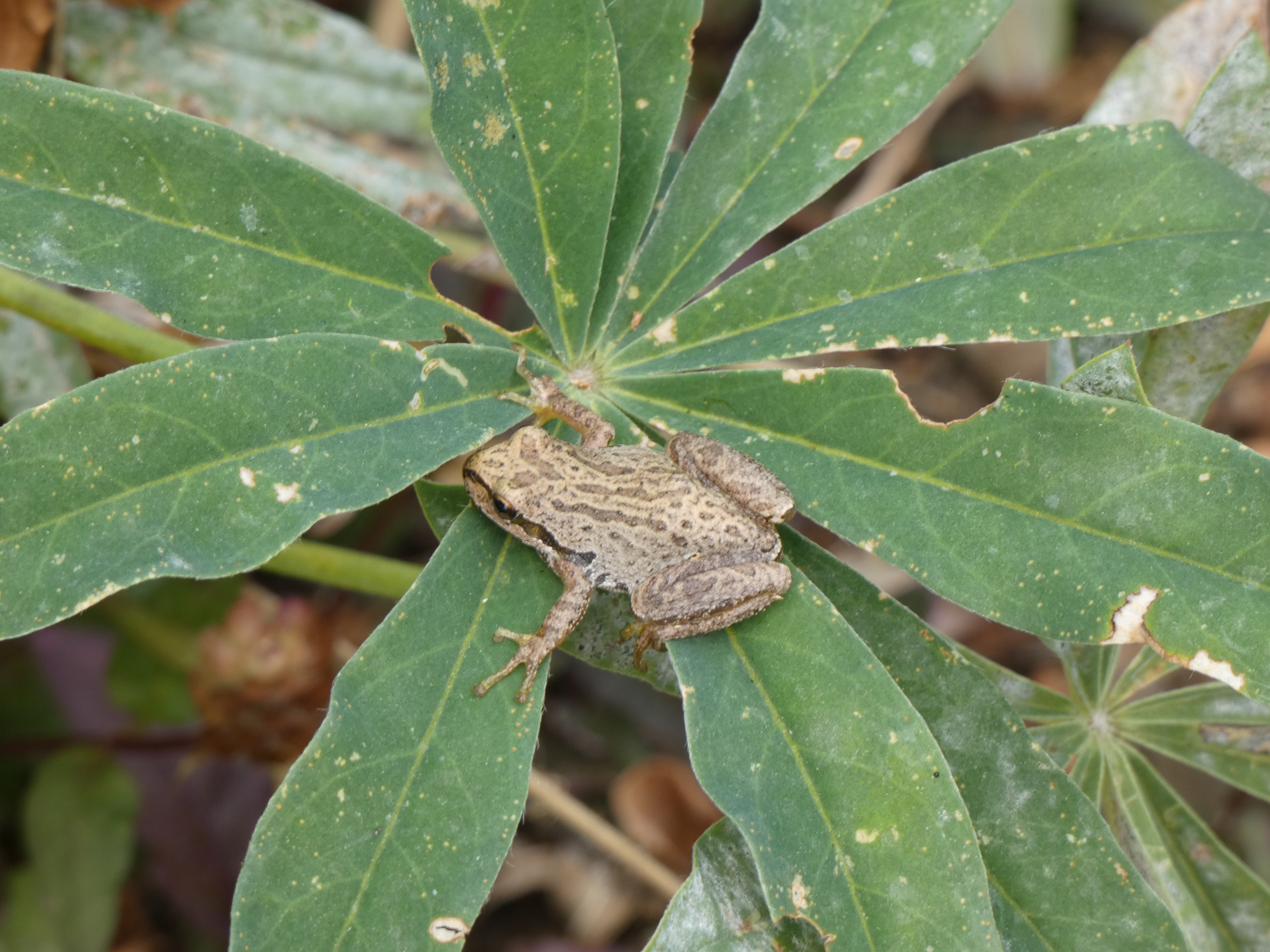
Within the last month, despite the chilly temperatures, the frogs have begun their singing. Far more likely to be heard than seen, the Pacific Chorus Frog (Pseudacris regilla) is a small frog species native to the Pacific Northwest. Formerly known as the Pacific Tree Frog, they can be found in wetlands and nearby woodlands throughout the year, but the transition from Winter to Spring gives us a window into the lives of these incredible beings.
Description:
Appearance:
These frogs are rather small, which likely helps them hide despite their loud vocalizations, typically around 2 inches in length as an adult. Often they are green or brown, though other colors can be seen. They have a prominent line from the tip of their nose to their shoulder.

Voice:
The vocalizations of the Pacific Chorus Frog are commonly used because they make a ribbit call along with a cree-eek sound. These calls increase when the humidity is higher and typically decrease when the weather is cold or dry. Males use the call most during mating season, which occurs most often from February to August, but may vary yearly.
Life Cycle:
For those who are lucky enough to live in areas where the Pacific Chorus Frogs are active, you may be able to witness the life cycle of these amphibians.
Eggs: The eggs are laid by females in clusters as small as 10, but can be larger than 70. They are fertilized externally by the males and a single female can lay multiple egg masses within a season. These masses can be 1-3 inches across and are often near the surface. Depending on the temperatures, eggs will take 2-5 weeks to hatch. During this time, they are often covered by algae and sediment which helps to camouflage the eggs as they develop. They may still be eaten by caddisfly larvae or other aquatic insects during this time, which is why large numbers of eggs are laid.
Tadpoles: Once they hatch, the tadpoles often have large heads and tails that allow them to move through the water. Since many eggs are laid in vernal pools, this period of their life can also be risky if there is not enough rainfall to keep the pools from drying out before they can live outside the water. They continue to be vulnerable to aquatic insects and birds during this time as well.
Froglets: Within 8-12 weeks, the tadpoles’ gills transform into lungs which allow them to breath air and sprout tiny legs from their now 1/2 inch bodies. During this time, their tail will shrink as they develop more adult coloring to allow them to hide amongst the trees, shrubs, grasses, reeds, and sedges that form the base of their home ecosystems.
Frogs: Within about 12 weeks, the frog has reached its adult form and will now hop in search of food. The seasonal pools in which they are born and develop are not used for year-round habitat, rather they will leave for surrounding wetlands, meadows, woods, or other nearby vegetated areas that can provide cover from predators like herons and kestrels. When it is time to mate, they will often return to the pools where they were born. As houses, roads, and sidewalks have been constructed, these can create obstacles for Pacific Chorus Frogs and similar species like the Red Legged Frogs, which are famously “taxied” across a busy highway to and from their pools. This can be a great time to see these incredible amphibians though if you watch your step.

What can you do:
As with any of the amazing living things we share our nature nooks and backyard ecosystems with, taking the time to learn is a wonderful first step. Naturalists are those who take the time to learn about the world around them. If you want to learn even more and don’t mind a trek in the mud, check with local organizations near you who conduct amphibian egg mass surveys – here is Portland, these include The Wetlands Conservancy, BARK, and Metro. Even attending an online or in-person training can give you a wonderful window into these amphibians and wetland inhabitants. Amphibians like the Pacific Chorus Frog are sensitive to changes in wetland environments acting as our canaries in the coal mines about things like water quality and pollution.
Fun Fact
There is some debate about which genus Pacific Chorus Frogs belong with. Originally, they were grouped with Hyla , or Tree Frogs. However, breeding habits (in cold weather vs. warmer weather) and structures like the size of their toepads, led to them being re-classified as Pseudacris , or Chorus Frogs. This groups them with the Spring Peepers resident to the Eastern U.S. who are also known for their vocals and vernal pool residency in the Spring.

Resources:
- All images are original to the author who reserves all rights. Please contact before using.
- https://wdfw.wa.gov/species-habitats/species/pseudacris-regilla#desc-range
- https://www.dfw.state.or.us/wildlife/living_with/docs/LWW_Pacific_Treefrog_final.pdf
- https://www.mister-toad.com/PacificTreeFrog.html


Leave a Reply