Hello and welcome back to another post in our Species Spotlight series!
Spring has sprung here in the Pacific Northwest – which means the forest floors begin to light up with Trillium. Read on below to learn more about these beautiful and iconic blooms.

What’s in a Name?
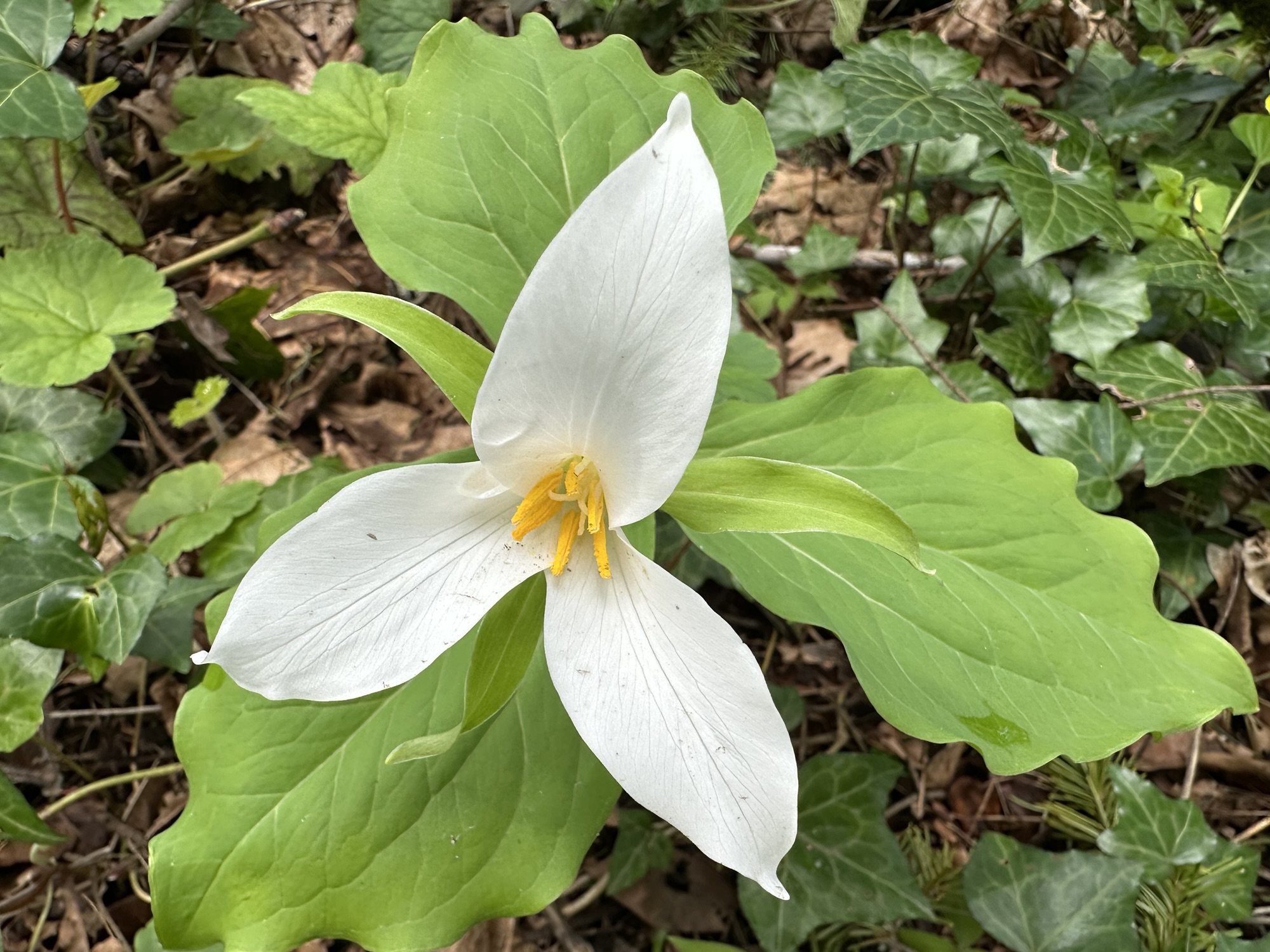
One of the most recognizable features of the Trillium is the three petals, with three small sepals, and three larger “leaves” – all arranged slightly askew of one another. Looking even closer, it even has three stigmas. These features are what led to its name – Trillium. They may also be referred to as “wake-robins” since they bloom early in the year – close to when robins return. A member of the lily family, multiple forms can be found across North America and Asia. Here in Oregon, the most widespread is the Western Trillium (Trillium ovatum), named for it’s egg shaped petals.
A Surprising Sprout
Under the umbrella like structures of the Trillium are quite a few surprises. First, the entire above-ground structure is a flower! It sprouts from a horizontal rhizome just beneath the soil. Sometimes multiple trillium will sprout from a single rhizome, which can lead to clusters seen in the woods. We often recognize the petals, but the large structures underneath are bracts – though they function much like a leaf would, with the ability to undergo photosynthesis and help generate energy.
Even more fascinating is how the trillium spread. If you spend enough time watching these bright woodland blooms, you may observe them being visited by bumblebees, moths, or beetles who help move pollen from one plant to another. Once the petals fall away, a small fruit is left behind. These are then visited by ants, who help spread the seeds throughout the coniferous or mixed deciduous/coniferous forests where they are found.
Note – the process of seed dispersal by ants is called myrmecochory and it support biomes on every continent except Antarctica! The ants carry portions of plants, like the oil-rich trillium fruit, back to their nests to feed larva. The intact seeds are then discarded to later sprout. Here in the Northwest forests, plants like Trillium, Bleeding Hearts, and Wild Ginger depend on this process to thrive.


“Leaves of Three”
The old adage “Leaves of three, leave it be” is typically used to indicate that a plant is toxic and shouldn’t be handled. Even though Trillium are not toxic, they should be left alone whenever possible. These plants do not recover easily from damage if picked or cut. And for Western Trillium, they need time to develop their most beautiful features. These plants take between 4 and 9 years from their seed stage to the first time they flower. Given even more time to mature, plants will eventually develop petals in shades of rich pink, purple, or (in some areas of Southern Oregon and Northern California) a deep red. Finding trillium without a visible flower or bud is not an automatic cause for concern though…both young and very mature plants do not flower annually.

Seek and Find
Finding Western Trillium requires the right site and time of year. They are most common in mixed or coniferous forests which are shady and moist. Trillium are less likely to sprout in years with little rainfall. They can be found between the coast and mountains in lower elevations throughout the southern British Columbia, Washington, Oregon, and northern California. This includes a number of the wooded parks in communities. Timing is everything if you are looking for their blooms – depending on the year it can be as early as February and as late as June – though most often seen in March through May. And like so many things in nature, once you find one, you are more likely to notice even more.
Until next time…Happy exploring!
Kirsten, the NW Naturalist


Leave a Reply